2025 · Audio-led psychological horror
Shadow Frames
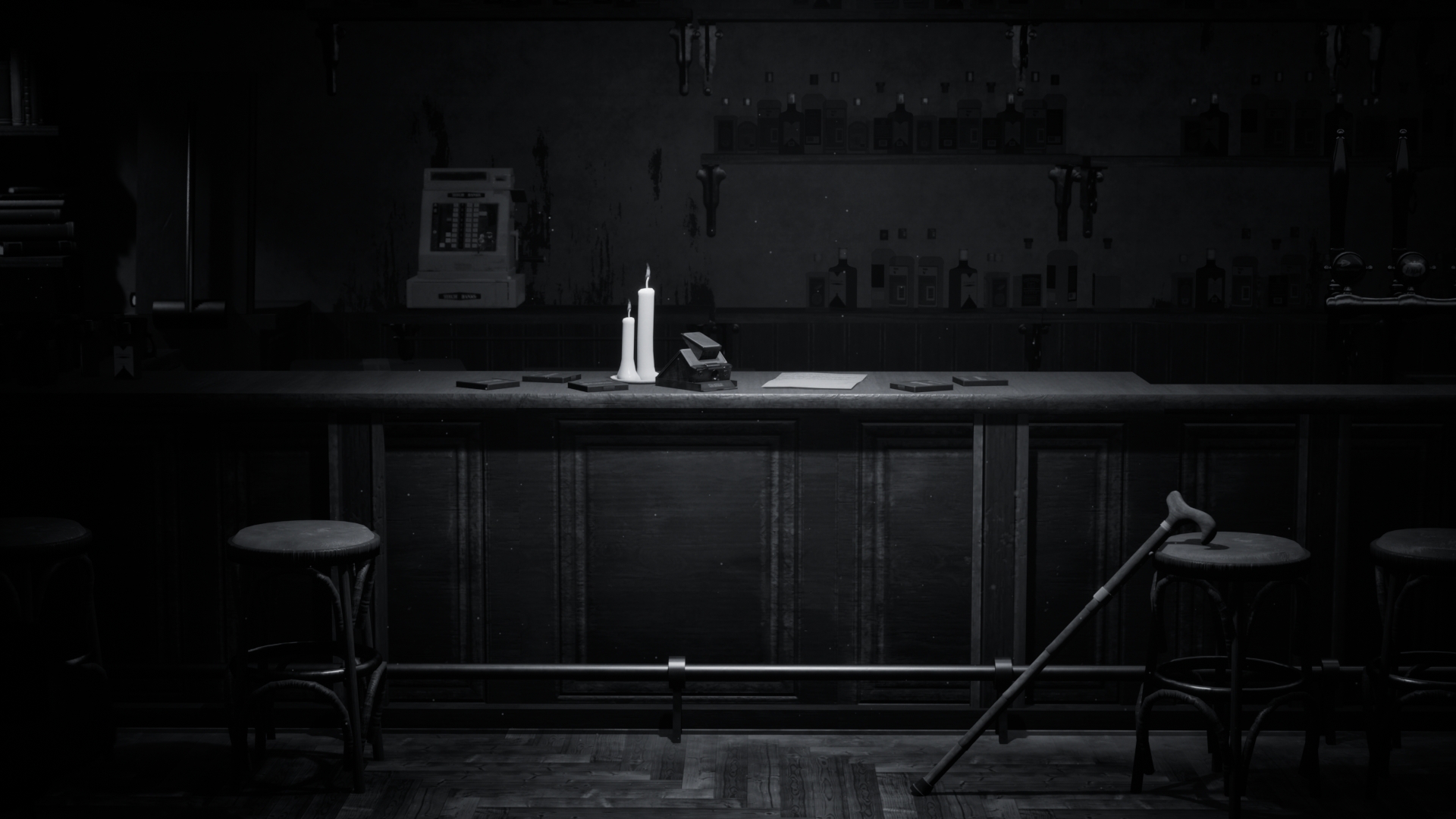
A horror game set in one abandoned pub, where the player finds changes by ear. As sole audio designer, I built the sounds that announce and locate each change.
Gameplay with the spatial mix. Headphones recommended.
Sound design and implementation
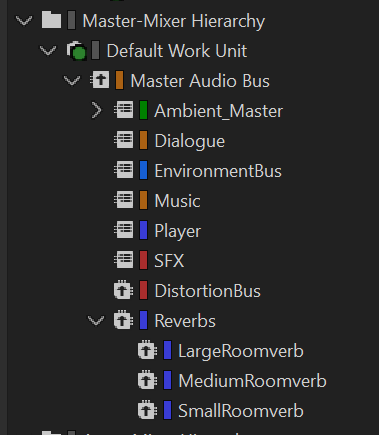
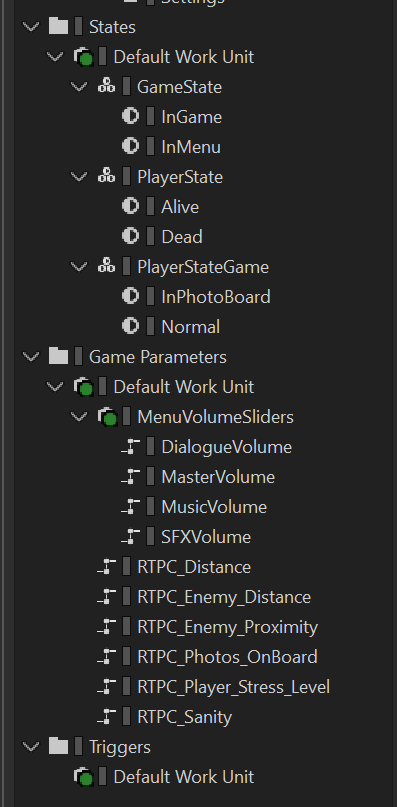
I handled sound design, voice recording, implementation and mixing. The finished game uses over 200 Wwise events, with mix changes driven by the player’s actions and the enemy’s distance.
The project brought together students from Howest DAE, RITCS and the Royal Conservatory of Ghent.
Alert, localisation and confirmation
The player finds changes in the pub without on-screen markers. Each anomaly has an alert, a directional clue and a confirmation sound.
01
Announcing a change
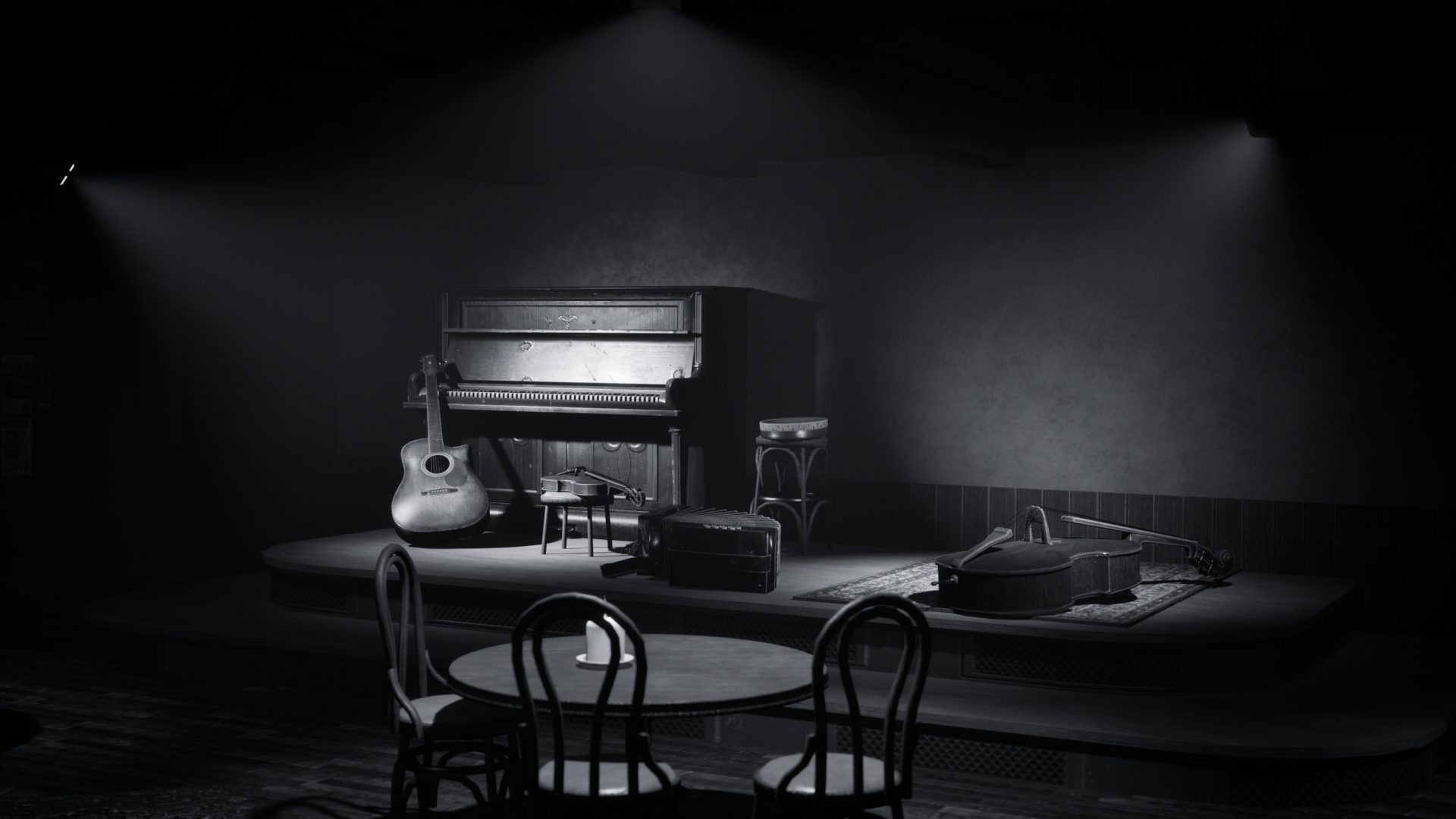
A short, non-directional alert signals that one of ten objects has changed.
02
Locating the object
The changed object emits its own spatial sound. The player follows it through the pub.
03
Confirming the photograph
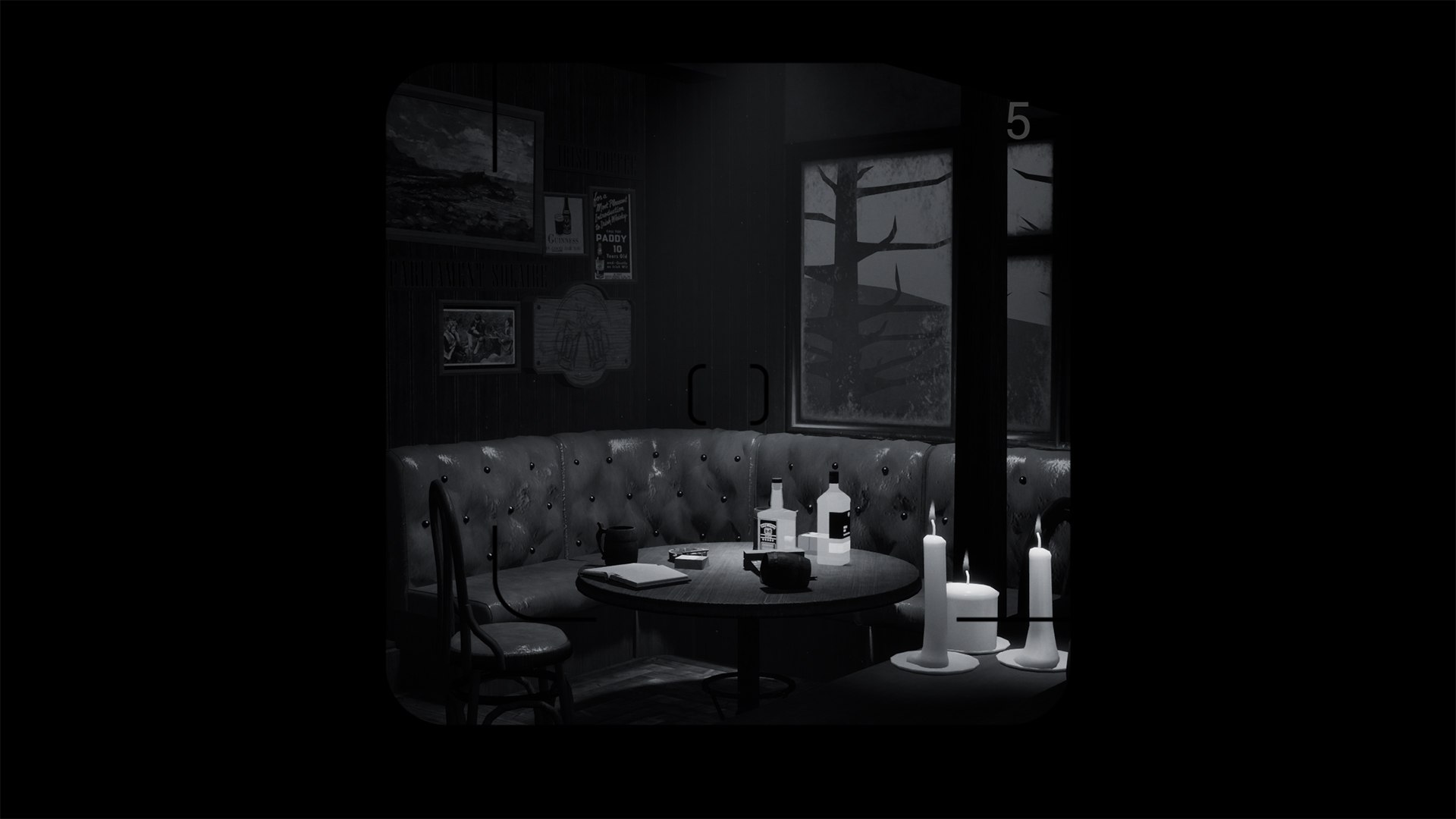
Raising the camera lowers the pub ambience and brings breathing and hand movement forward. A reversed whisper confirms the shot.
Mix priority during an anomaly
The mix reacts to the enemy’s distance, the raised camera and which anomalies are active. When too many sounds play at once, music and ambience give way. The clues, the camera and the enemy stay, because those are the sounds the player is acting on.
Music
Ambience
Clues
Camera
Enemy
Mix priority schematic. Bar lengths illustrate the hierarchy, not measured levels.
Fixes from weekly playtests
The enemy sound switched on and off near one particular distance. Footsteps failed when parts of the level moved. And raising the Polaroid camera was easy to miss.
I stopped the enemy sound from flickering, made footsteps follow the actual floor material, and gave the raised camera its own mix state.
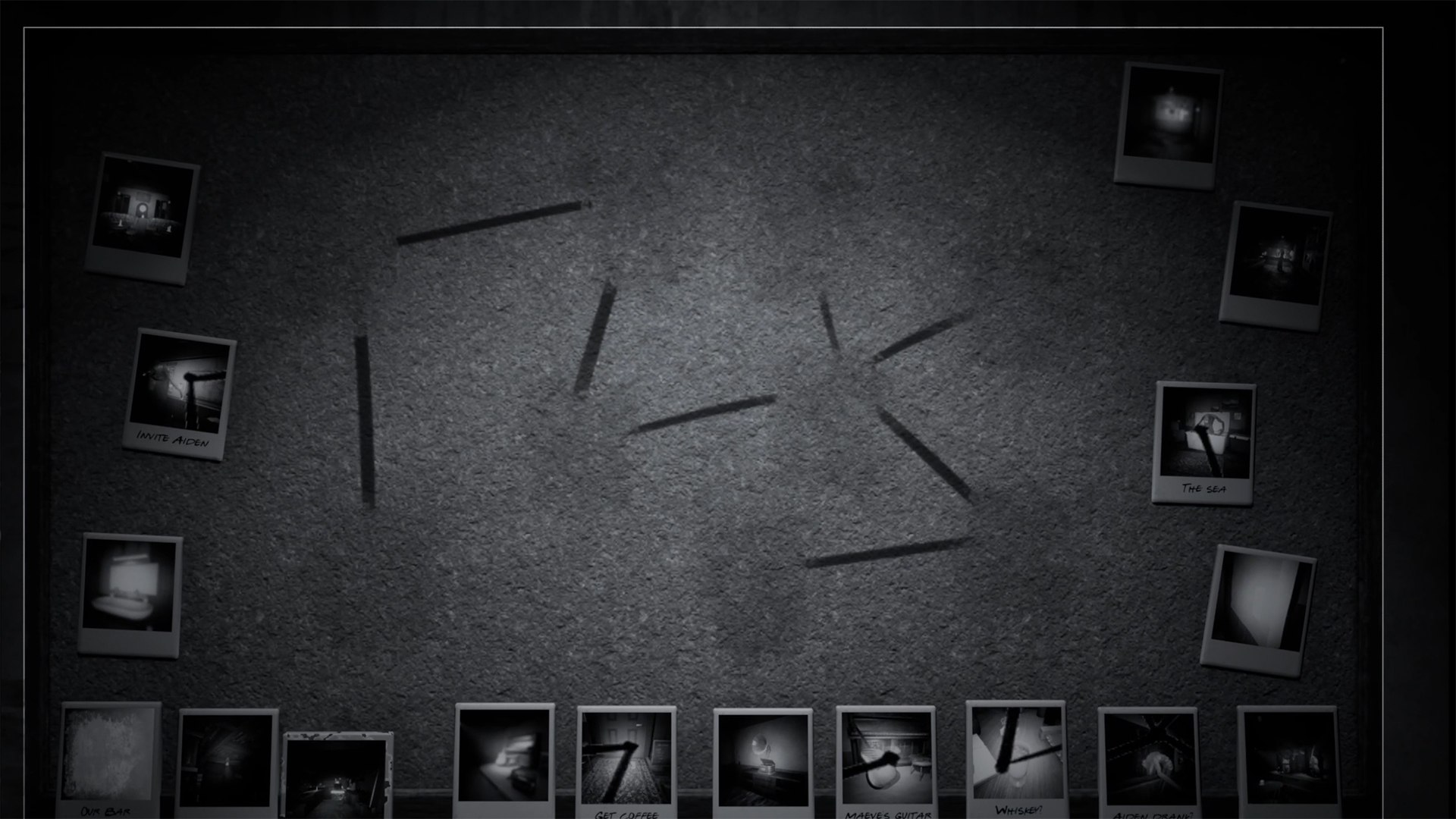
Every confirmed photograph goes on the board.
Audio settings in Unreal and Wwise
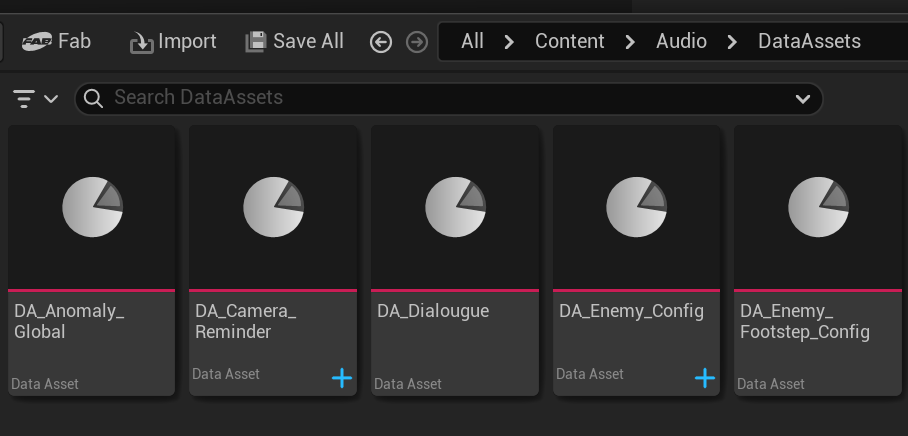
I exposed floor, anomaly and enemy settings as Unreal Data Assets, so designers could tune them without changing code. Wwise holds the bus hierarchy and the curves that control the mix.