2026 · VR training simulations
XR Labs
As Technical Sound Designer at XR Labs Belgium, I built spatial audio and weapon sound systems for selected VR training simulations in Unity.
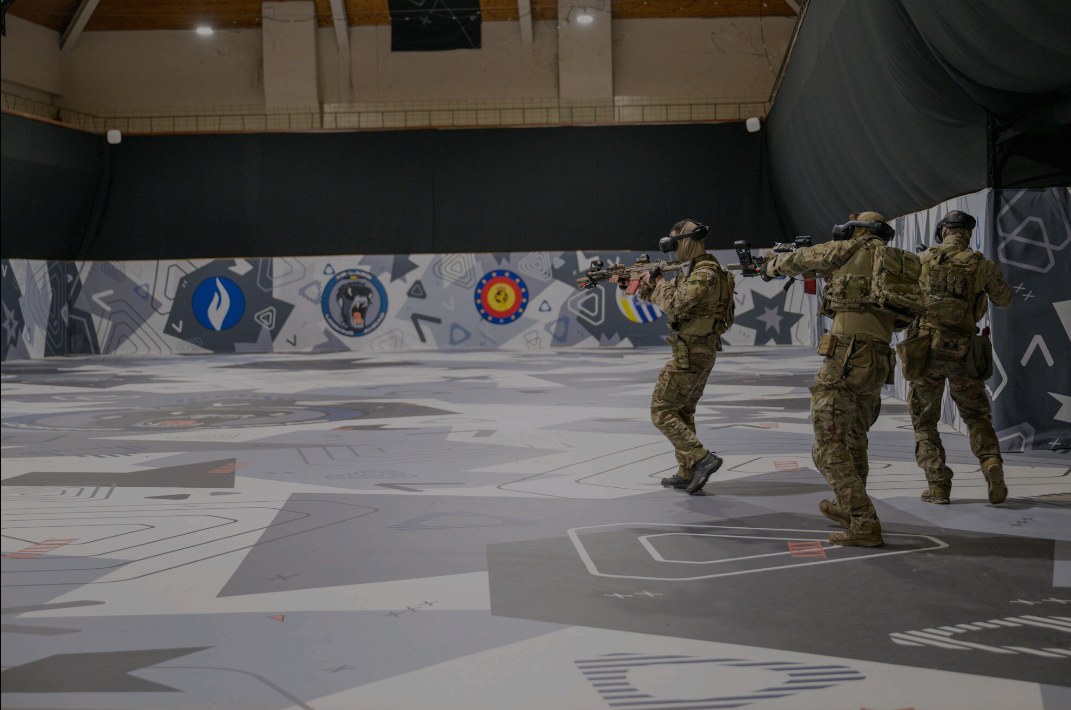
Weapon audio and headset testing
The simulations are used in training for police, military and customs services. I built the weapon audio system and designed Taser T10 sounds from layered library recordings.
I tuned spatialisation in the headset, checking whether a source could be located by ear and how a wall changed its sound.
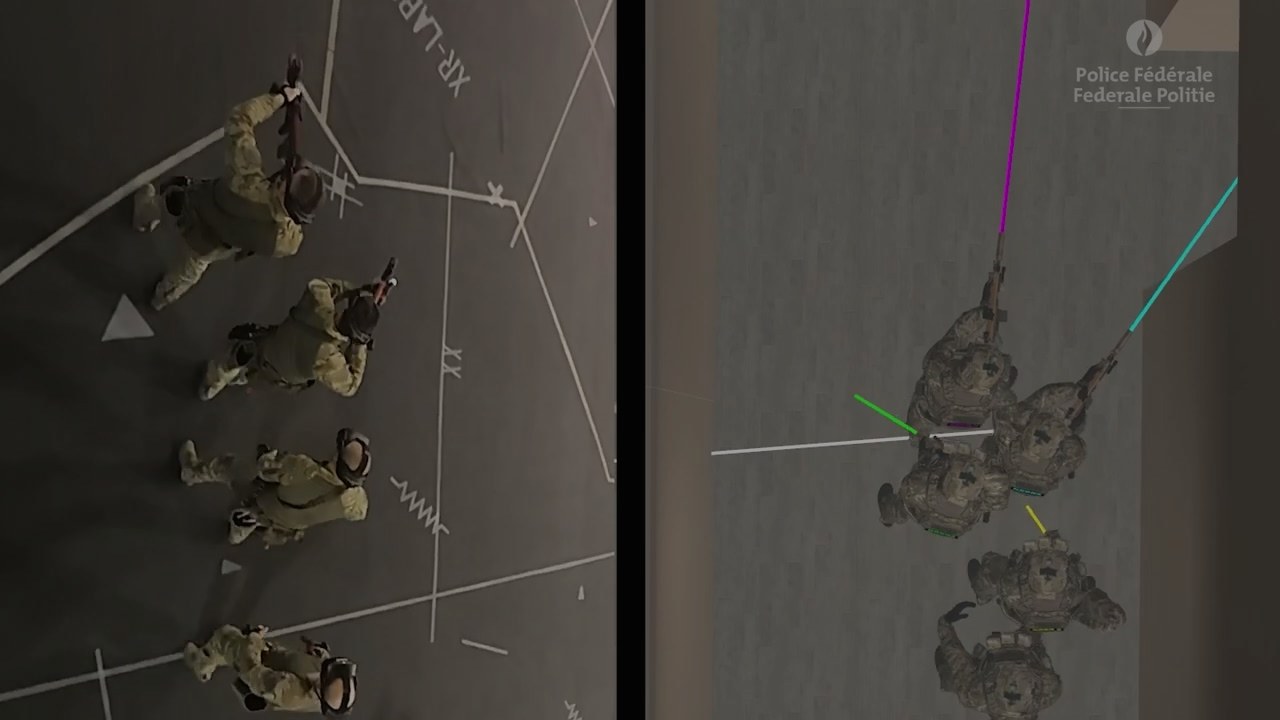
The hall and the simulated room, side by side.
Spatialisation and sound between rooms
I used Steam Audio for directional sources, occlusion and indirect paths. These stills from the public facility video show the room layouts; they do not demonstrate the production audio.
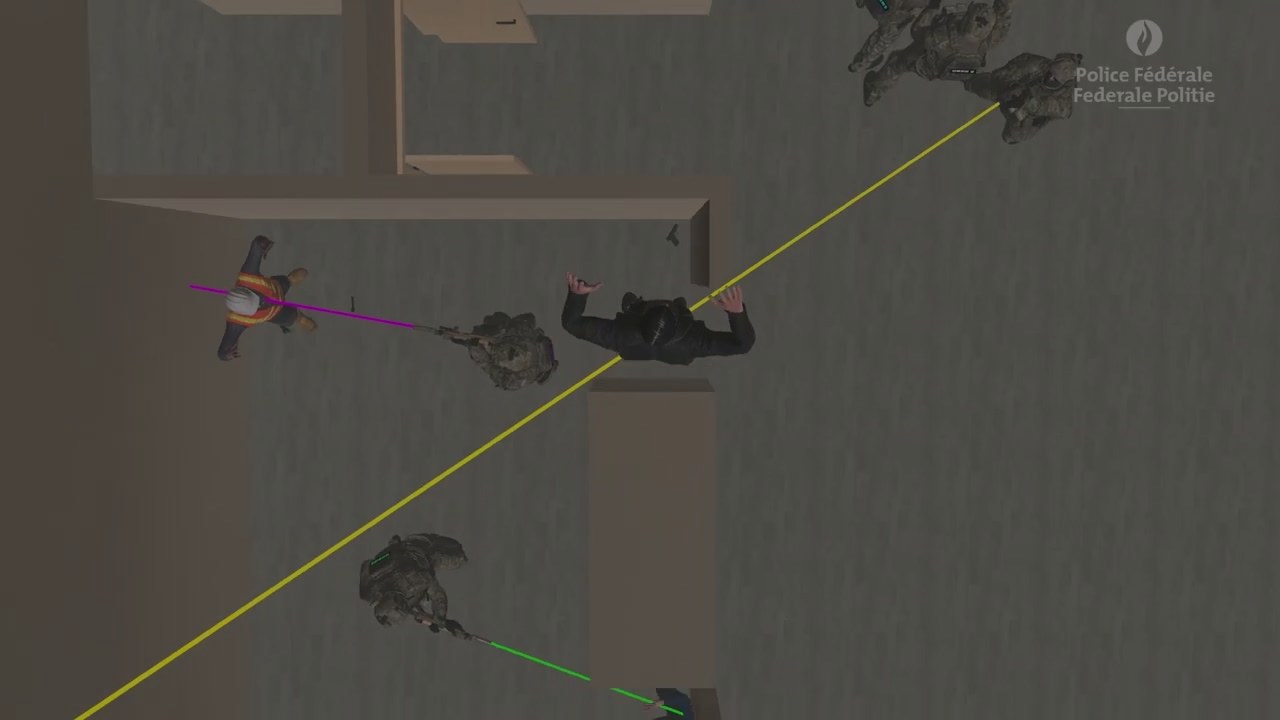
01
Source position
A sound keeps its place in the virtual room, so a trainee can turn towards it.
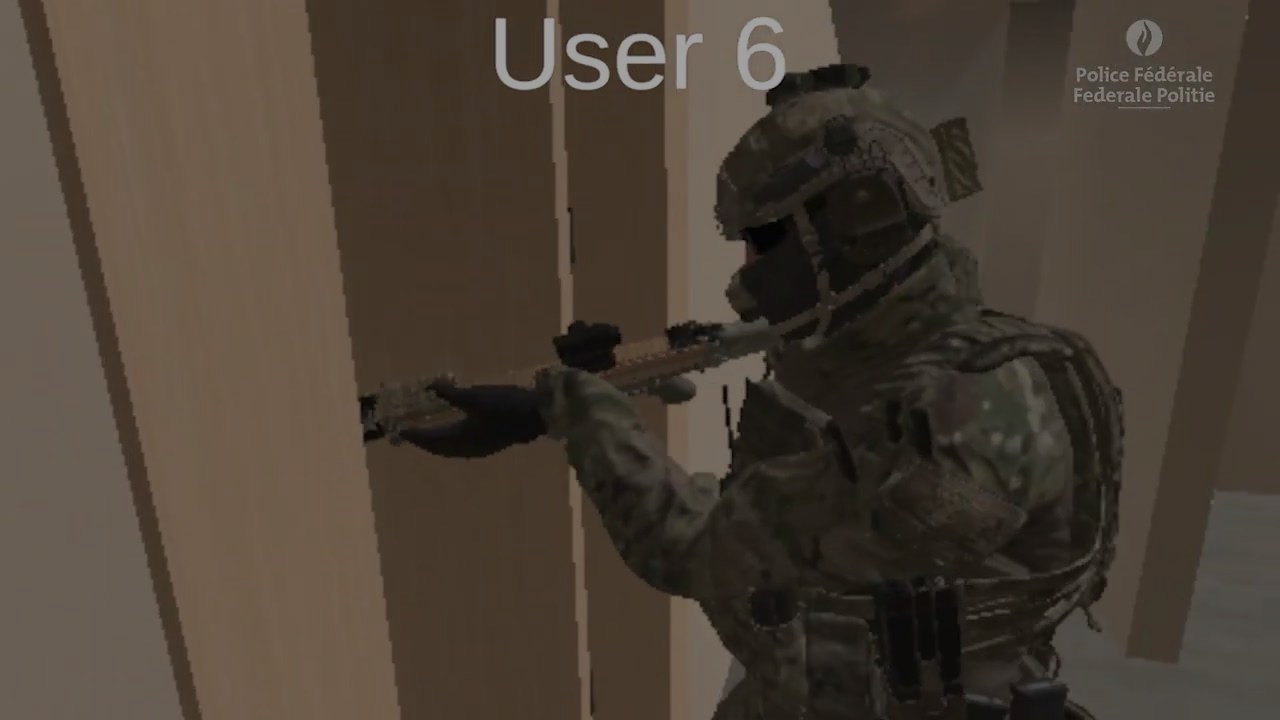
02
Wall occlusion
Occlusion reduces the direct sound when a wall blocks the source.
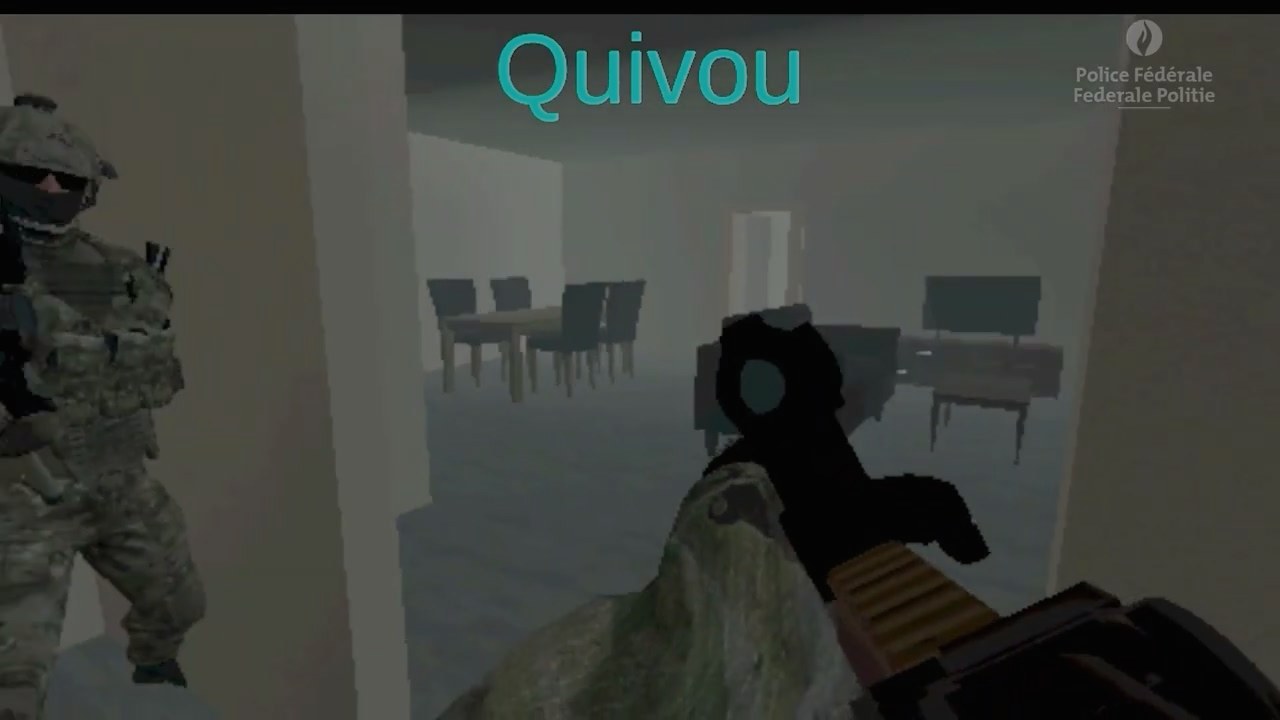
03
Indirect paths
Sound can reach the listener through an open doorway when the direct path is blocked.
Weapon sound across distance
Each shot blends near and far layers. As the listener moves away, close detail fades while the distance layer takes over.
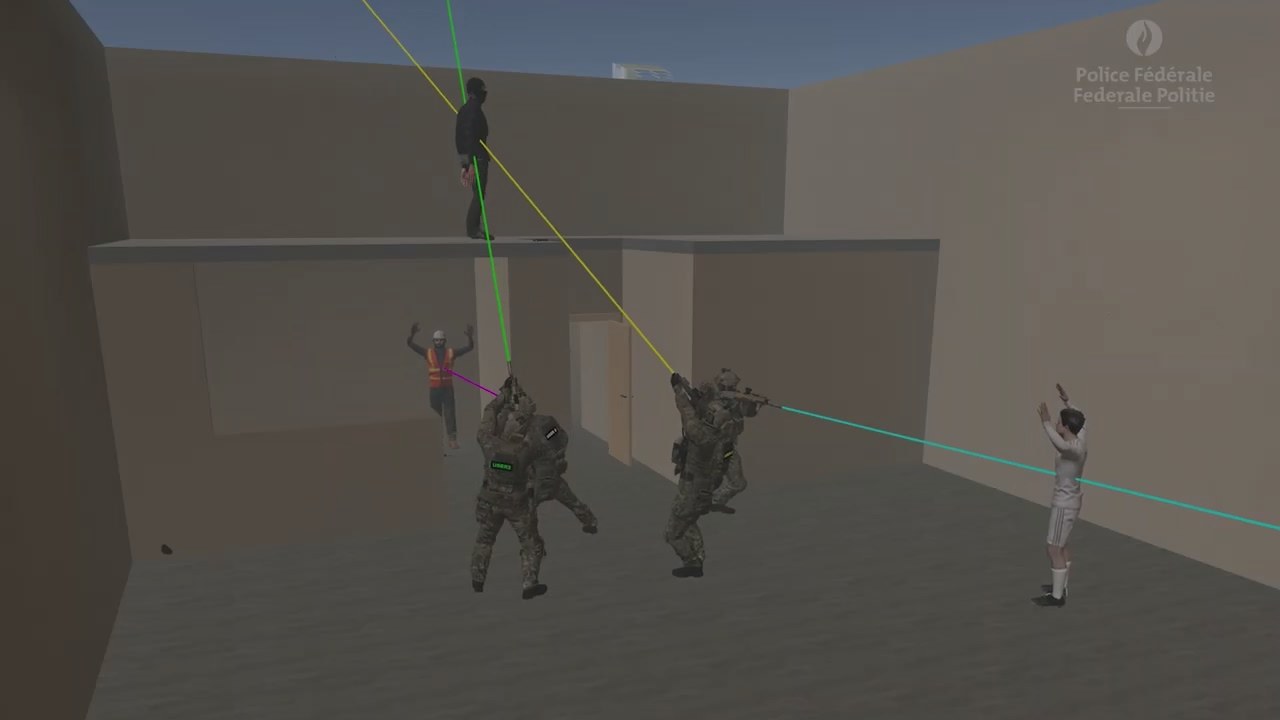
Near and far in the same courtyard.
Public footage of the training facility
This XR Labs clip shows several trainees using the facility together. The footage is public; client scenarios, production audio, code and internal settings are not included on this page.
Training DSU, XR Labs Belgium. 00:45.