Sound Design Reel

I mute the original audio and rebuild everything from scratch, no sound libraries.

Role Sound Designer
Type Audio Redesigns
Year 2023-2024
Tools Reaper, Logic Pro
Reaper Logic Pro Granular Synthesis Field Recording Foley

Why Redesigns

Take a game scene you know by heart. Mute the original audio. Now make it sound real again using only your own recordings and processing. That is the exercise. It's harder than it sounds because people already know what the original sounds like, so every difference sticks out.

These four redesigns span about a year of work. The first one, Fractured Horizon, is honestly rough - basic spaceship hums and door sounds. But it taught me that sync timing is everything. By the time I got to God of War, I had a process: record raw material, layer and process in Reaper, then match the energy of the original without copying it.

The rule across all four projects was the same: no commercial sound libraries. Every sound starts from a microphone or a synth oscillator. If I could not record it or build it, it did not go in the mix. That constraint forced me to get creative with what I had. A gas burner becomes dragon fire. A meat slap becomes an axe hit. When you can't just search a library, you start listening to everyday stuff differently. Everything becomes potential source material.

Redesigns

God of War - Combat Redesign

Redesign

I muted the original audio and rebuilt everything. The axe hits are metal-on-meat recordings I layered in Reaper. I literally hit a pork shoulder with a wrench and that became the base layer. Shield blocks have that sharp crack because I compressed the transient hard and let the tail ring out. The enemy screams took the longest to get right. First attempts sounded cartoonish. I ended up pitching down my own voice recordings and blending them with animal sounds until it stopped being funny and started sounding genuinely disturbing.

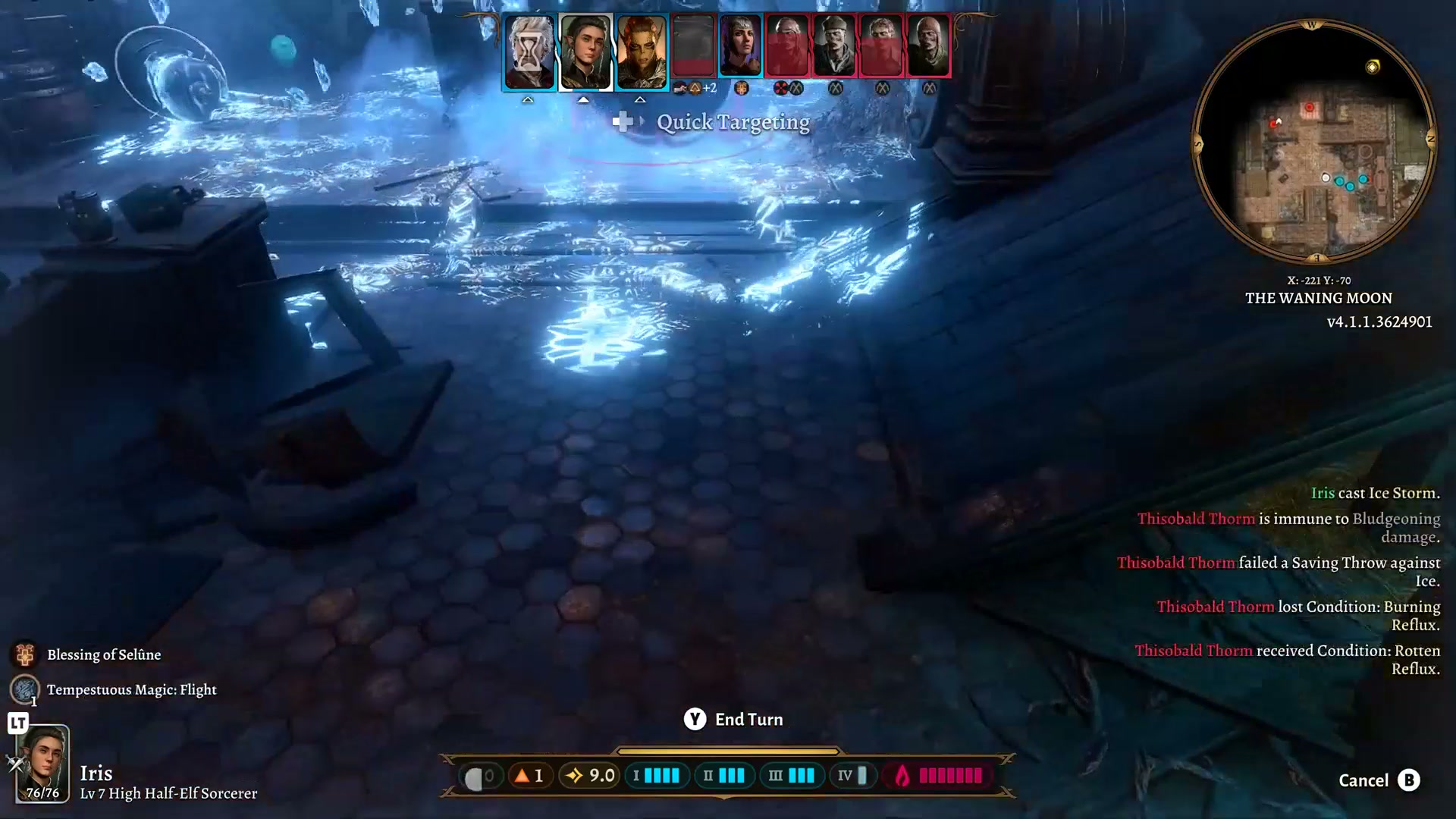
Baldur's Gate 3 - Spell FX Remake

Redesign

Fire spells start with a gas-burner recording pitched down an octave, then I added synth crackle on top for the magical layer. That two-layer approach - something physical on the bottom, something synthetic on top - became my formula for all the spell sounds. Ice is mostly granular synthesis with a slow attack so it sounds like it is forming. Each element needed to feel physically different when you hear it cast. Fire is fast and chaotic, ice builds up slowly, lightning hits hard and disappears. I wanted you to know which spell it is before the visual even shows up.

P2000 + Sci-Fi Weapon - Sound Design

Synthesis + Foley

Same exercise, opposite directions. The P2000 pistol is foley and field recordings: mechanical clicks, a dry close-mic shot, room reflections added back in post. Every layer is something I recorded in the real world. The sci-fi weapon is pure synthesis and spectral processing. No microphone involved at all. Sounds like electricity arcing through glass. Doing both at once made it really clear how different the two approaches are.

Fractured Horizon

First Project

My first sound design project ever. Replaced all audio for a sci-fi scene: spaceship hum, alarm tones, mechanical doors sliding open. Honestly basic stuff compared to what came later. But this is where I learned how much timing matters. A door sound 3 frames late looks completely wrong. Your brain catches it instantly even if you cannot explain why. I also learned that a spaceship hum is not one sound - it is five or six layers at different frequencies, and if any one drops out, the whole thing feels thin. Simple project, but the lessons stuck.